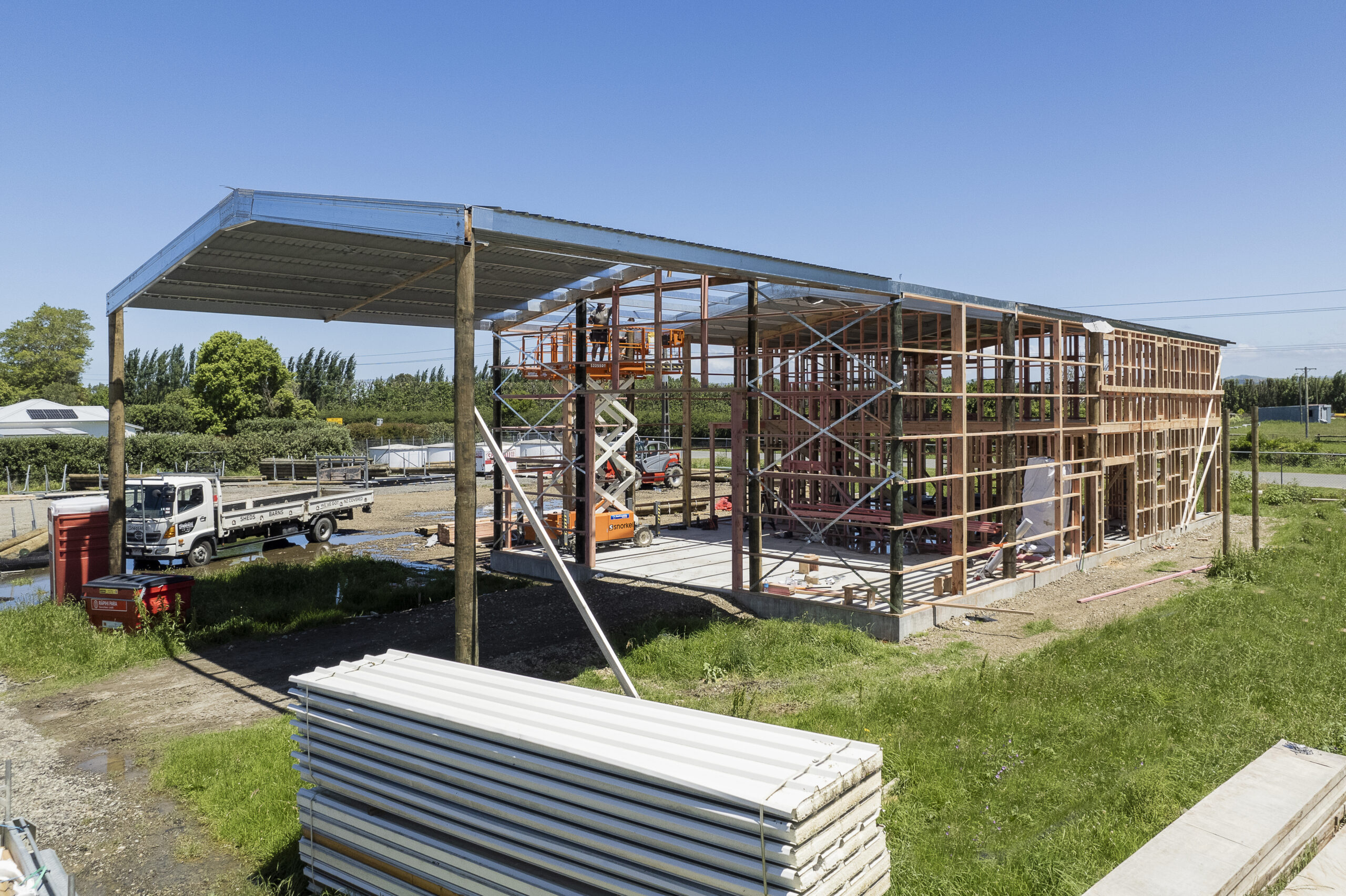
The difference between standard and construction loans
We often get asked by customers what the difference between standard and construction loans is, how to get a construction loan, and what needs to be done for banks consider a loan to be a construction loan.
Now, you can ask us anything you like about a shed, because we know heaps about that, but when it comes to loans, we thought it best to ask a bank. Because loans are what they do best, and here’s their advice:
If your application meets any of the following criteria, your bank will consider the loan to be a construction loan. Let’s walk through some of those options:

Any works that alter the profile or increase the floor area/square metres (up or out) of the existing dwelling or outbuildings.
You should note that although garages are outbuildings, when building a garage that is fully detached from the main dwelling, it’s not classed as a construction loan if the cost is less than $100k.
Any works that require a building consent/permit and the loan amount (for the construction or renovation) is over $100k.
Here’s an example that highlights the difference between a Construction loan and a Standard application:
Customer A wants to build a garage on their property. It will be separate (detached) from the main house and will cost $50k. They’ve checked with their builder and have confirmed it will require consent.
The bank would treat this as a standard application rather than a construction loan, because a stand-alone garage will not increase the floor area of the main dwelling and, even though a building consent is required, the loan amount is less than or equal to $100k so this wouldn’t qualify as a construction loan.
Customer B also wants to build a garage on their property, but they want it attached to the main house. The cost is $75k and they have also confirmed that the work will require consent.
The bank would treat this as a construction loan because, even though the loan required is less than $100k, the work being carried out will increase the floor area of the main dwelling as the garage is attached to the house.
If a loan is considered a construction loan, then the customer will need to provide costs and quotes or a fixed price contract, and may also require a registered valuation.
Kitset sheds or habitable buildings:
Kitset sheds, relocatable homes and owner builds are all unique in regard to the build type, total costings, and time to complete the build project. For these reasons they need additional policy requirements and are limited to no more than the extended security value of the land only; in these cases any value of the dwelling portion of the build will not be realised until the building is fixed to foundations with all services (like plumbing, electricity etc) attached, so Kitsets, Relocatable and Owner Builds are considered to be Construction Lending..
There’s a maximum LVR of 80% of Land Value only – meaning that, for these applications, the bank will only lend to 80% of the land value. Clients will either need to have cash to make up the difference or other security the bank can take to cover the lending until such time as the property is finished, and code of compliance has been issued.
Other requirements may include:
- Confirmation that the land is residential (with a residence to be constructed within 12 months)
- Council Approved Plans, including Building Consent and Resource Consent where needed
- Full costings to be detailed in a schedule supported by quotes/estimates covering the full construction
- A Valuation and/or Sale and Purchase agreement for the land value
- Contracts Works/Builders Risk Insurance with the Bank’s interest noted is required, including confirmation of public liability cover of at least a minimum of $NZ 1 million
In some cases, the company providing the kitset takes (as an example) 50% of the price up front and then doesn’t require final payment until code of compliance has been issued.
In short, the bank would need a registered valuation on an “as is” and “on complete” basis – to lend up to 80% of land value (being the “as is” valuation) and then final draw down of the remaining 50% when whole build is completed (based on “as complete” value).
Our best advice? Ask your bank or mortgage provider what they suggest!