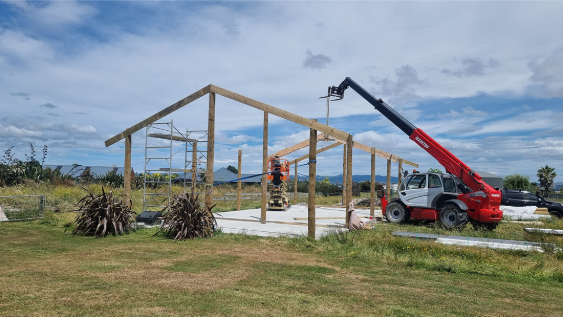
Avoid council hold-ups with your shed
Planning a shed build and want to keep council delays to a minimum? Too right!
Most consenting slow-downs come down to where you’re putting your shed. Councils have a bunch of site-specific rules, and if you don’t meet them, you’re in for RFIs, redesigns, and unexpected costs.
The good news? You can spot most of these issues early – long before you finalise your shed design or go anywhere near a consent application.
A bit of upfront homework means faster approvals, sharper pricing, and fewer surprises.
Here are 8 key site checks to tick off before you lock in your plan

1. Boundary setbacks
On a rural property, your boundary setback is simply how far your shed needs to sit from the legal boundary. As a rough guide, many councils want around 6 metres to the side and rear boundaries—but in reality, setbacks can range anywhere from 1–20 metres depending on your zone and district plan.
Road boundaries tighten again: 10–15 metres is common, and state highways can require even more.
If you want to build closer than the rule allows, you’ve got two options:
a) Deemed Permitted Boundary Activity (DPBA)
This applies when the only rule you’re breaching is the setback, and your neighbour gives written approval.
b) Resource Consent
Takes longer, costs more, and isn’t guaranteed—use this option only if DPBA isn’t possible.
If you’re unsure what applies to your site, flick us a message and we’ll check it out for you.
2. Height restrictions
Some rural zones have a maximum shed height measured from existing ground level to the ridge.
Sometimes the rules get even tighter when you’re close to a boundary.
If you’re over the limit, you may be able to:
- reduce your roof pitch
- shift the shed further from the boundary
If not, you’ll likely need resource consent.
3. Flood Zones
Many rural blocks sit in mapped flood areas or show overland flow paths on council GIS maps. If your shed lands in one, council may require:
- minimum floor levels
- engineering advice on flow paths
- scour and flood-hazard mitigation
Whenever possible, it’s best to move the shed outside the flood zone.
If you can’t, be prepared for raised floor levels, careful pad shaping, and well-managed stormwater.
Always check the council viewer before locking in your shed location.

4. Outstanding Natural Areas & Overlays
Some sites fall under extra planning layers such as:
- Outstanding Natural Landscapes/Features
- Significant Natural Areas (SNAs)
- Heritage or coastal overlays
These don’t ban sheds, but they do add restrictions. You may face:
- tighter height and earthworks limits
- requirements for low-reflective cladding colours
- the need for landscape or ecology assessments
Resource consent is often required, so expect a longer process.
5. Ground Conditions
Councils don’t always ask for a Geotech report—but it’s becoming more common.
If your site has soft ground, fill, peat, high groundwater or a significant cut, you’ll likely need one.
Good ground = simple prep. Strip topsoil → add 200–400 mm of AP20 → compact.
Poor ground = engineered footings. This can increase costs and slow consent until engineers sign off.
If your block is known to have soft or peaty areas, get a Geotech engineer in early. It helps with accurate pricing and smoother consenting.
6. Site-Works Restrictions
Some rural zones limit:
- how many square metres of earthworks you can do
- how much you can cut/fill
- when you can carry out site works (noise or seasonal rules)
Rules tighten again near waterways.
Before you start digging, check whether your district caps earthworks or requires resource consent.

7. Stormwater Disposal
Shed roofs collect plenty of water, and it has to go somewhere safe.
Common rural options include:
- soak pits
- natural swales
- tanks (if you’re harvesting)
Some areas have stricter rules—for example, you can’t discharge stormwater within 100m of a natural waterway unless it’s fully controlled. Always confirm what applies to your site.
8. How close are the powerlines?
Overhead powerlines can bring major delays.
Your shed needs to meet safe clearance distances, which vary depending on the voltage.
If you can’t move the shed, the lines may need to be relocated—and that can be expensive and slow.
Let’s wrap it up:
Most council hurdles can be avoided with early research and smart planning.
Tick off these checks before confirming your shed design and you’ll save yourself time, money, and headaches.
Not sure which rules apply to your block?
Get in touch with the SHEDS4U team—we can help with site-specific checks so you know exactly what’s possible.


